
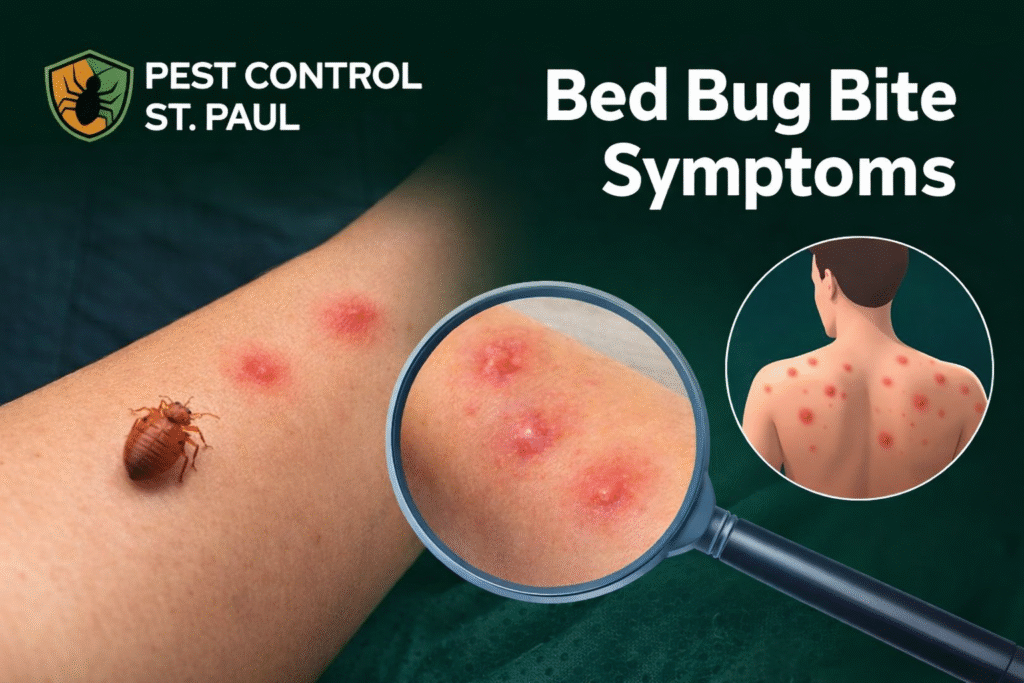
If you’ve woken up with mysterious itchy red welts on your skin, you might be dealing with bed bugs. Bed bug bites are one of the most common pest problems affecting homes and businesses across St. Paul and the surrounding areas. Understanding bed bug bite symptoms is crucial for early detection and swift action. This comprehensive guide will help you identify bed bug bites, recognize signs of infestation, and learn about professional bed bug control and removal options.
What Do Bed Bug Bites Look Like?
One of the first questions people ask when they suspect a bed bug infestation is: “What do bed bug bites look like?” The appearance of bed bug bites can vary significantly from person to person, making them challenging to identify based solely on visual inspection.
Typical Appearance of Bed Bug Bites
Bed bug bites typically appear as:
- Small, flat or slightly raised red welts on the skin
- Inflamed, itchy areas that may become blistered
- Clusters of 3-5 bites or linear patterns (often called “breakfast, lunch, and dinner” bites)
- Small red marks that may develop into more pronounced swelling over time
- Bites that may not be immediately noticeable or painful when initially inflicted
The key characteristic of bed bug bites is their clustered or linear arrangement, which distinguishes them from other insect bites. This pattern reflects the bed bug’s feeding behavior as it moves along exposed skin while you sleep.
Why Bed Bug Bites Look Different on Different People
The appearance and severity of bed bug bite symptoms vary widely due to several factors:
Individual Sensitivity: People have different immune responses to bed bug saliva. Some individuals develop severe reactions with large welts and significant swelling, while others may experience only minor irritation or no visible reaction at all.
Anti-coagulant Reaction: Bed bugs inject an anti-coagulant with their saliva to prevent blood from clotting. This chemical largely determines how your skin reacts to the bite. Some people’s skin becomes highly inflamed, while others show minimal response.
Frequency of Bites: Repeated exposure to bed bug bites can actually change your body’s reaction. Some people become less sensitive over time, while others develop increased allergic responses.
Delayed Reactions: Unlike mosquito bites that appear immediately, bed bug bite symptoms may take hours or even several days to develop. Some people never show any visible symptoms despite being bitten repeatedly.
Where Do Bed Bugs Bite?
Understanding where bed bugs bite can help you identify an infestation early. Bed bugs are attracted to exposed skin while you sleep, so bites typically appear on areas that are most accessible during nighttime hours.
Common Areas for Bed Bug Bites
- Face and neck – exposed during sleep
- Hands and arms – often draped over blankets
- Shoulders – frequently exposed during sleep
- Legs – depending on sleep position
- Torso – upper body exposure
Bed bugs will also bite pets, creating clusters of small red marks on their skin. Pet owners often mistake bed bug bites on dogs and cats for flea bites, delaying treatment.
Bed Bug Bite Symptoms: What to Expect
If you suspect bed bug bites, watch for these common symptoms:
Immediate Symptoms
- Itchy, red welts or swelling
- Small, red marks appearing in tight lines or clusters
- A slight burning sensation initially
- Marks that may be tender to the touch
Delayed Symptoms
- Itching that intensifies over the first few days
- Increased inflammation and swelling
- Blister-like skin inflammations in severe cases
- Potential for secondary skin infections from scratching
Important Note on Reactions
Some people experience no symptoms whatsoever, even with active bed bug bites. This makes visual inspection alone insufficient for bed bug identification. If you suspect a bed bug infestation, look for other signs beyond bite symptoms, such as dark fecal spots on bedding or shed skins.
Signs of Bed Bug Infestation Beyond Bites
While bed bug bite symptoms are the most obvious indicator of a problem, they’re not the only sign of infestation. A comprehensive inspection should include:
Physical Evidence of Bed Bug Infestation
Blood Spots on Bedding: Small red or rust-colored spots on sheets, pillowcases, or mattresses indicate bed bug feeding. You may have rolled over a recently fed bug, causing it to rupture and leave blood stains.
Fecal Droppings: Bed bug feces appear as small dark spots (often darker than bite marks) clustered in areas where bed bugs hide. These are commonly found along mattress seams, on box springs, or behind headboards.
Shed Skins: As bed bugs grow, they molt and leave behind translucent brown or tan-colored shed skins. Finding these is a clear indication of an active infestation.
Live Bugs: While bed bugs are nocturnal and hide during the day, you may spot them in your mattress, box spring, or bed frame. Adult bed bugs are about the size of an apple seed and are reddish-brown in color.
Musty Odor: In severe infestations, bed bugs produce a distinctive musty smell from their scent glands. This odor is often described as similar to coriander or moldy cloth.
Where Bed Bugs Hide
- Mattress seams and buttons
- Box spring folds
- Bed frame cracks and crevices
- Behind baseboards
- In electrical outlets
- Under wallpaper
- Furniture seams and cushions
Are Bed Bug Bites Dangerous?
One reassuring fact: bed bugs do not transmit diseases to humans. Unlike mosquitoes or ticks, bed bugs are not vectors for serious illnesses.
However, bed bug bites can pose secondary health risks:
Potential Health Complications
Secondary Skin Infections: The greatest danger from bed bug bites comes from scratching. When you scratch bite marks, you break the skin and create an entry point for bacteria. This can lead to:
- Cellulitis (bacterial skin infection)
- Impetigo
- Staph infections
- Open sores that take longer to heal
Who Is Most at Risk?
- Young children with developing immune systems
- Elderly individuals
- People with compromised immune systems
- Individuals with existing skin conditions
- Bedridden or hospitalized patients
Psychological Effects: Living with bed bug bite symptoms and the awareness of an infestation can cause:
- Sleep disruption and insomnia
- Anxiety and stress
- Reduced quality of life during treatment
Prevention of Secondary Infections
- Resist the urge to scratch – easier said than done, but critical
- Keep bite areas clean and disinfected
- Trim fingernails to reduce damage from unconscious scratching
- Apply hydrocortisone cream to reduce itching
- Consult a healthcare provider if bites become infected
Bed Bug Bites vs. Mosquito Bites
- Mosquito bites appear individually and usually itch immediately
- Bed bug bites appear in clusters with delayed itching
- Mosquito bites are round; bed bug bites are often irregular
Bed Bug Bites vs. Spider Bites
- Spider bites typically appear as isolated incidents with two small puncture marks
- Bed bug bites appear in clusters or lines
- Spider bites are rare; bed bugs cause multiple bites during a single night
Professional Bed Bug Control and Removal
If you’ve confirmed bed bug bites and signs of infestation, professional treatment is essential. DIY methods rarely eliminate infestations completely, and bed bugs can rapidly develop resistance to over-the-counter pesticides.
Why Professional Bed Bug Exterminator Services Are Necessary
Comprehensive Inspection: Professional bed bug exterminators conduct thorough inspections to locate all hiding spots, not just visible bites.
Targeted Treatment: A bed bug exterminator uses advanced techniques including:
- Heat treatment (raising temperatures to lethal levels)
- Chemical treatments (EPA-approved insecticides)
- Integrated pest management strategies
- Follow-up inspections to ensure complete elimination
Prevention of Resistance: Professional pest control companies rotate treatment methods to prevent bed bugs from developing resistance to specific pesticides.
Safety Compliance: Professional bed bug removal services follow strict safety protocols to protect your family and pets.
Bed Bug Control Process
- Initial Inspection: Thorough assessment of infestation severity and scope
- Treatment Plan: Customized approach based on your specific situation
- Treatment Application: Professional application of approved control methods
- Follow-up Visits: Monitoring to ensure complete elimination
- Prevention Guidance: Tips to prevent future infestations
What to Expect During Professional Treatment
- May require vacating premises for several hours
- Post-treatment cleaning protocols provided by your pest control provider
- Laundry guidelines for bedding and clothing
- Preparation steps for furniture and belongings
- Timeline for seeing results (typically 1-2 weeks for complete elimination)
Professional Bed Bug Removal Services in St. Paul
If you’re experiencing bed bug bite symptoms in St. Paul and need professional help, don’t wait. The longer an infestation persists, the larger and more expensive the problem becomes.
How to Choose a Bed Bug Exterminator
Look for:
- Licensed and insured pest control professionals
- Experience with bed bug infestations
- Use of integrated pest management techniques
- Warranty or guarantee on services
- Transparent pricing
- Positive customer reviews
Questions to Ask:
- What treatment methods will you use?
- How many visits will be needed?
- What is your success rate?
- Do you offer a guarantee?
- What preparation is required from me?
Cost of Bed Bug Removal
Professional bed bug removal costs vary based on:
- Severity of infestation
- Size of affected area
- Treatment methods used
- Number of follow-up visits required
- Location and accessibility
While professional services represent an investment, they’re far more cost-effective than repeated DIY attempts that often fail.
Prevention: Avoiding Future Bed Bug Infestations
After professional bed bug removal, prevention is key to avoiding reinfestation.
Prevention Tips
When Traveling:
- Inspect hotel rooms for bed bugs before unpacking
- Keep luggage on racks, not the floor
- Use protective travel bags for clothing
- Inspect luggage before returning home
- Wash and dry all travel clothes on high heat
At Home:
- Vacuum regularly, especially around bedding and furniture
- Use protective mattress and box spring encasements
- Reduce clutter where bed bugs can hide
- Inspect secondhand furniture before bringing it inside
- Maintain regular pest control inspections
Early Detection:
- Check bedding regularly for signs of bed bugs
- Monitor for bite symptoms
- Watch for musty odors or dark spots on bedding
- Act immediately if you suspect any signs of infestation
Conclusion
Bed bug bite symptoms can vary widely, making proper identification challenging. If you’re experiencing clusters of red, itchy welts—especially in linear or grouped patterns—combined with other signs of infestation like fecal spots or shed skins, you likely have a bed bug problem.
The good news? Professional bed bug removal services are highly effective. Prompt action prevents the infestation from spreading and reduces treatment costs.
Don’t let bed bugs control your sleep and comfort.
If you’re dealing with bed bug bites in St. Paul, contact a professional bed bug exterminator today. Our experienced team specializes in comprehensive bed bug control and removal, using proven methods to eliminate infestations completely.
With the right professional guidance and treatment, you can reclaim your bedroom and enjoy restful, bite-free nights once again.
FAQ About Bed Bug Bites
Q: How long do bed bug bite symptoms last?
A: Most bed bug bites resolve within 1-2 weeks, though itching may persist longer in some individuals.
Q: Can bed bugs transmit diseases?
A: No, bed bugs do not transmit diseases, though secondary infections from scratching are possible.
Q: How many bites will I get from one bed bug?
A: A single bed bug may create 3-5 bites in one feeding session if it’s interrupted or searches for the best blood vessel.
Q: Should I see a doctor for bed bug bites?
A: Seek medical attention if bites become infected, show signs of severe allergic reaction, or don’t improve within two weeks.
Q: Can I treat bed bugs myself?
A: While over-the-counter treatments exist, professional bed bug exterminator services have much higher success rates and prevent resistance development.