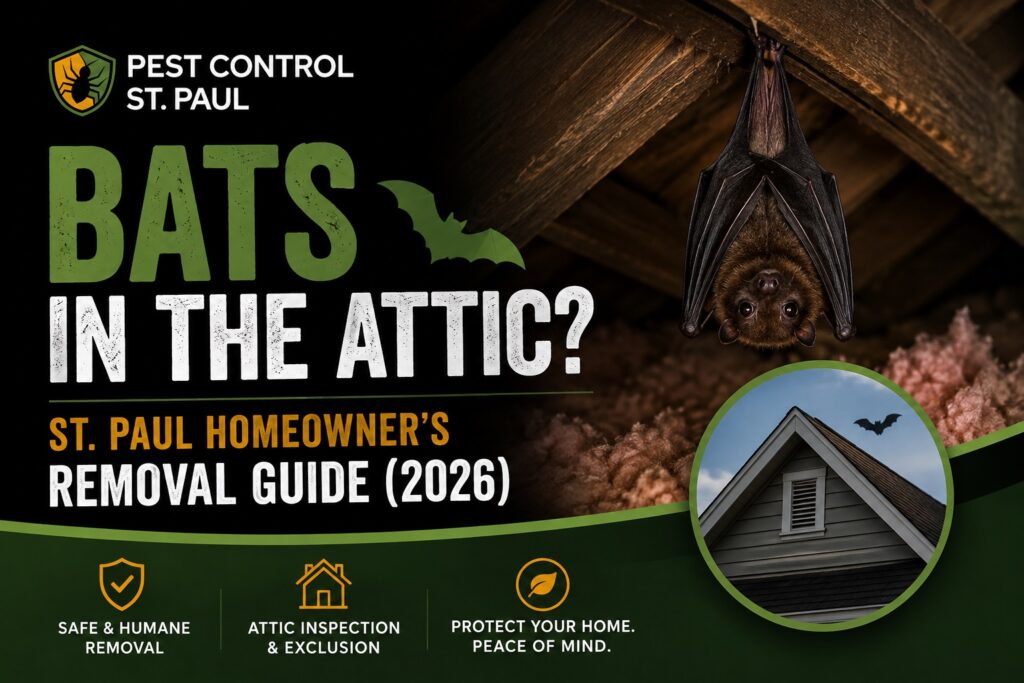
If you’ve heard faint scratching, squeaking, or fluttering coming from your ceiling right around dusk, you may not be dealing with mice or squirrels at all. In St. Paul, one of the most common — and most misunderstood — attic invaders is the bat. Minnesota is home to seven bat species, and two of them, the little brown bat and the big brown bat, are notorious for setting up summer and winter roosts inside homes, especially older houses with gaps around rooflines, chimneys, and soffits.
Bats aren’t out to bother you. They’re simply looking for a warm, dark, undisturbed space, and a century-old St. Paul attic near Crocus Hill or Merriam Park fits that description perfectly. But a bat colony left in place can grow, cause property damage, and create a real health concern. Here’s what you need to know if you suspect bats have moved into your home.
Signs You Have Bats in Your Attic
Bat infestations are quieter than most pest problems, which is exactly why they often go unnoticed for months. Watch for:
- Scratching or fluttering sounds in the walls or ceiling, most noticeable at dawn and dusk when bats are heading out to feed or returning to roost
- A sharp, musty, ammonia-like odor coming from the attic, caused by accumulated droppings and urine
- Small dark droppings (guano) near attic entry points, on insulation, or on the ground below eaves — guano crumbles into a fine powder when touched, unlike mouse droppings, which stay solid
- Dark rub stains around soffit gaps, roof vents, or chimney openings where bats squeeze in and out repeatedly
- Bats seen at dusk flying in loose circles around your roofline before dropping toward a gap in the siding or fascia
If you notice several of these signs at once, there’s a good chance you’re not dealing with one stray bat but an established colony, which is far more common in older St. Paul housing stock than most homeowners expect.
Why Bats Are Different From Other Attic Pests
Unlike mice, squirrels, or raccoons, bats are a protected species in Minnesota. State law prohibits killing or harming bats, and there are no legal poisons, gases, or repellent products for bat removal. The only legal and effective method is exclusion — a humane process where one-way devices are installed at active entry points, allowing bats to fly out to feed at night but preventing them from getting back in. Once the colony has fully vacated, every remaining entry point is sealed to keep bats from returning.
Timing matters enormously here. Minnesota’s bat maternity season generally runs from late May through August, when flightless pups are too young to leave the roost. Excluding adult bats during this window can accidentally trap and orphan pups inside your attic, which creates both an ethical problem and a much worse odor and insect problem once they die. A licensed technician will always time exclusion work around this maternity season.
Health and Property Risks of an Attic Bat Colony
Bats themselves rarely seek out contact with people, and in fact a single little brown bat can eat over 1,000 mosquitoes in a single hour, making them genuinely useful to have around outdoors. The risk comes from prolonged indoor roosting:
- Guano accumulation can build up into deep piles under a roost, creating odor problems and, in rare cases, respiratory concerns from airborne spores in long-neglected sites
- Rabies exposure, while uncommon, is a real concern if a bat is found in a living space, especially in a room with a sleeping person, a child, or a pet — any direct contact should be reported to county health authorities right away
- Structural staining and insulation damage from urine and droppings soaking into attic materials over time
- Secondary pest activity, since dead bats and guano piles can attract carpet beetles and other scavenging insects
None of this tends to happen overnight. It’s the slow accumulation over one or more seasons that turns a minor roosting issue into a costly cleanup.
What to Do If You Find a Bat Inside Your Home
A single bat that’s flown into a living room or bedroom is a different situation than a colony in the attic. If this happens:
- Stay calm and close the door to the room the bat is in, isolating it from the rest of the house.
- If no one has been bitten or scratched, open a window or exterior door and turn off the lights — the bat will typically find its own way out.
- If there’s any chance of contact with a person or pet, do not let the bat leave. Contact county health authorities for guidance on capturing it safely for testing.
- Never handle a bat with bare hands.
Why DIY Bat Removal Almost Always Backfires
It’s tempting to plug the gap you can see and call it done, but bat colonies often use multiple entry points that aren’t obvious from the ground. Sealing one gap while bats are still inside can trap the colony indoors, leading to a chaotic and smelly situation as bats search for a way out through your living space. Store-bought “bat repellent” sprays and ultrasonic devices are not proven to work and are not a substitute for physical exclusion and sealing.
A proper bat removal plan involves a full exterior inspection to map every active entry point, correctly timed exclusion device installation, confirmation that the colony has completely left, and permanent sealing of the structure — plus, when needed, guano cleanup and sanitation.
Keeping Bats Out for Good
Once a colony has been excluded, prevention comes down to maintaining your home’s exterior:
- Seal gaps around chimneys, soffits, fascia boards, and roof vents, especially on older homes
- Install fine mesh screening over gable and ridge vents
- Repair damaged or gapped roof flashing promptly
- Schedule an annual exterior inspection each spring, before maternity season begins, so any new gaps get caught early
If you’re hearing activity in your attic or have spotted bats around your roofline at dusk, don’t wait for the colony to grow. Contact Pest Control St Paul for an inspection — our team knows how to handle wildlife exclusion safely, legally, and on the right seasonal timeline for Minnesota properties.