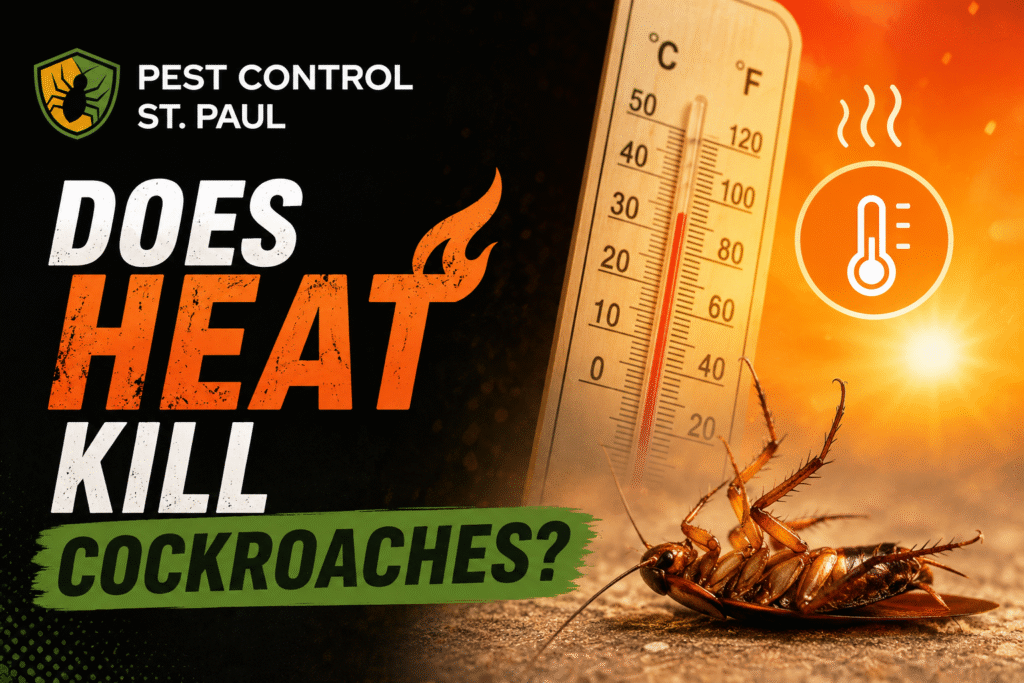
Discover the truth about using heat as a cockroach control method and why professional treatment is often the better choice.
Cockroaches are among the most resilient pests homeowners face, and if you’ve ever dealt with an infestation, you’ve likely wondered about every possible solution, including heat. The question “Does heat kill cockroaches?” is more complex than a simple yes or no, and understanding the nuances can help you make informed decisions about pest control.
The Short Answer: Yes, But With Caveats
Heat can absolutely kill cockroaches, but only at temperatures significantly higher than what most people can achieve in their homes or businesses. While cockroaches are heat-loving insects that thrive in warm environments, there’s a critical difference between warm and lethal temperatures.
Cockroaches can survive in temperatures ranging from freezing to about 104°F (40°C). However, most species begin to suffer at temperatures above 115°F (46°C), and sustained exposure to 118°F (47.7°C) or higher will eventually kill them. The warmer the temperature, the faster the lethal effect.
How Cockroaches Respond to Heat
Unlike humans, cockroaches don’t regulate their body temperature internally. They’re ectothermic, meaning they rely on external heat sources to maintain their body temperature. This unique physiology makes them incredibly adaptable to various climates, but it also creates a vulnerability.
Heat Tolerance Varies by Species
Different cockroach species have varying heat tolerances. The German cockroach, the most common indoor pest, tends to have lower heat tolerance than the American cockroach. This distinction matters when considering heat-based pest control methods.
Duration Matters as Much as Temperature
It’s not just about reaching a certain temperature the duration of exposure is equally important. Brief exposure to high heat won’t necessarily eliminate an infestation, especially if roaches can escape to cooler areas. Sustained heat over extended periods is far more effective.
Key Fact: Studies show that cockroaches exposed to temperatures of 118°F (47.7°C) for 90 minutes will experience 100% mortality. However, achieving and maintaining this temperature throughout an entire structure is extremely challenging.
Heat Treatment for Cockroaches: Professional Methods
While household heating won’t eliminate cockroaches, professional heat treatment is a legitimate pest control method used by licensed professionals. Whole-structure heat treatments can be effective but come with significant considerations:
How Professional Heat Treatment Works
Professional heat treatments involve raising the interior temperature of an entire structure to 135-145°F (57-63°C) for several hours. This requires industrial-grade equipment, careful monitoring, and expertise to ensure safety. The process is typically used for severe infestations or in situations where chemical treatments are unsuitable.
Advantages of Professional Heat Treatment
- Chemical-free, making it safe for homes with children or pets (when properly executed)
- Can penetrate areas where sprays and baits may not reach
- Effective against multiple pest species simultaneously
- No ongoing residual effects to worry about
Disadvantages and Limitations
- Extremely expensive, often costing $2,000 to $5,000+ per treatment
- Can damage temperature-sensitive items like electronics and artwork
- Requires vacating the premises for 24-48 hours
- Doesn’t prevent future infestations without follow-up measures
- Limited availability, not all pest control companies offer this service
Why Your Home’s Heating System Won’t Solve the Problem
You might be tempted to simply crank up your thermostat to eliminate cockroaches. Unfortunately, this approach is ineffective for several reasons:
First, residential HVAC systems aren’t designed to reach temperatures high enough to kill cockroaches. Most home heating systems maintain temperatures in the 65-75°F range, which is precisely where cockroaches thrive.
Second, cockroaches can escape to cooler areas. In walls, basements, crawl spaces, and other hard-to-reach locations, your home’s heat won’t penetrate effectively enough to create lethal temperatures.
Third, excessive heat can damage your property. Pushing your HVAC system to extreme temperatures risks damaging furniture, flooring, and other belongings.
Better Alternatives to Heat Treatment
For most homeowners, professional chemical and non-chemical pest control methods offer more practical and cost-effective solutions:
- Gel Baits: Highly effective at eliminating cockroach colonies with minimal chemical exposure
- Insect Growth Regulators (IGRs): Prevent roaches from reproducing, breaking the infestation cycle
- Integrated Pest Management (IPM): Combines multiple strategies, including exclusion, sanitation, and targeted treatments
- Perimeter Treatments: Professional application of residual pesticides where roaches hide and travel
- Regular Monitoring: Early detection prevents small problems from becoming major infestations
Prevention: The Best Strategy
Rather than relying on heat to kill existing cockroaches, focus on preventing infestations in the first place:
- Eliminate food sources by cleaning thoroughly and storing food in sealed containers
- Remove standing water and fix leaky pipes
- Declutter and reduce hiding spaces
- Seal cracks and crevices where roaches enter and hide
- Schedule regular professional pest inspections
The Bottom Line
While heat can indeed kill cockroaches, it’s not a practical solution for most homeowners. Professional heat treatments exist but are expensive and limited in availability. For effective and affordable cockroach control, partner with a licensed pest control professional who can assess your situation and recommend a treatment plan tailored to your specific needs.
If you’re dealing with a cockroach infestation in the St. Paul area, don’t waste time experimenting with ineffective methods. Contact our team of expert pest control professionals today for a comprehensive inspection and treatment plan.