Carpenter ants are one of the most stubborn and damaging pests found in St Paul homes. They do not eat wood like termites, but they carve smooth tunnels inside damp or rotting wood to build their nests. Over time, these nests weaken structures and create costly repairs. The good news is that early identification and the right removal steps can protect your home before the damage grows.
This complete guide will help you understand what carpenter ants look like, how to spot the early signs of an infestation, and the best ways to get rid of them. If the problem is severe, this guide also explains when it is time to call a professional like Pest Control St Paul.
What Carpenter Ants Look Like
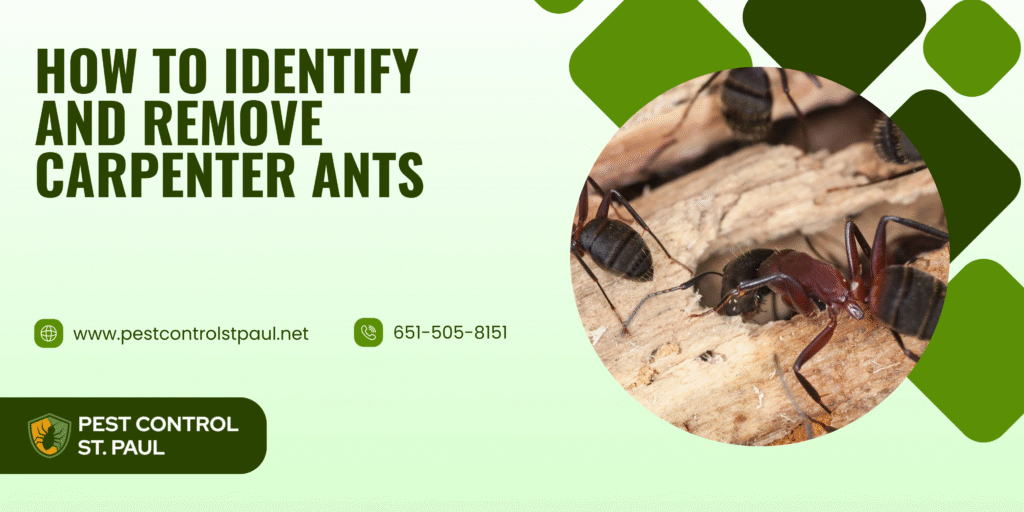
Carpenter ants are larger than most household ants, which makes them easier to identify once you know what to look for. They are usually black or dark reddish in color. Some carpenter ants also have wings during the mating season. These winged ants are often confused with termite swarmers, but termites have straight antennae and equal-length wings, while carpenter ants have bent antennae and wings of different lengths.
Most adults range from one-fourth to one-half inch in size. If you see ants this large walking along walls, windows, or wooden surfaces, there is a chance your home has a carpenter ant colony nearby.
Early Signs of Carpenter Ant Activity
Catching a carpenter ant problem early makes removal much easier. Here are the key signs to look for in your home.
1. Sawdust-like material called frass
Carpenter ants push out wood shavings as they dig tunnels. This material looks like soft sawdust mixed with tiny bits of dead insects. You may find it under wooden beams, window frames, decks, porches, or inside basements.
2. Rustling or crackling noises in walls
If you put your ear close to the wall and hear faint rustling, clicking, or crunching sounds, you might be hearing carpenter ants moving inside the wood.
3. Trails of large ants
Following an ant trail can lead you directly to the nest or a satellite colony. Carpenter ants usually travel between their outdoor food source and their indoor nest.
4. Soft or damaged wood
Wood that has been hollowed out by carpenter ants will sound empty when tapped. The inside of the wood will look smooth and polished, almost like it has been sanded.
5. Moist or decaying wood around the home
Carpenter ants prefer damp wood. Homes in St Paul with past water leaks, poor drainage, or old wood siding are at higher risk.
Why Carpenter Ants Choose St Paul Homes
St Paul homes often attract carpenter ants because the climate is humid in summer and cold in winter. This combination damages wood over time. Older neighborhoods also tend to have wooden decks, garages, porches, and window trim that become weak and damp.
Carpenter ants do not need a large opening to enter. A tiny gap in siding, a crack near plumbing lines, or a branch touching the house can be enough for them to move in and build a satellite nest.
How to Remove Carpenter Ants Step by Step
Once you confirm you have carpenter ants, removing them quickly is important. Here are the most effective methods used for eliminating them.
Step 1: Locate and Destroy the Nest
Finding the main nest or satellite colonies gives you the best chance of complete removal.
Use ant baits
Place slow-acting baits along ant trails. Carpenter ants take the bait back to the colony, where it spreads to other ants and eventually reaches the queen. This process can take several days, but it is one of the most reliable solutions.
Apply insecticide dust
Dust insecticides can be applied to cracks, wall voids, and wooden tunnels. This type of treatment spreads throughout the nest and kills hidden ants that you cannot see.
Inject foam insecticides
Foam expands inside wood cavities, filling the entire tunnel system. This helps kill ants deep in the nest where sprays and baits may not reach.
Treat damaged wood
If the nest is inside wood that you can access, drilling small holes and injecting insecticide helps eliminate the colony. Severely damaged wood may need to be replaced to prevent future infestations.
Step 2: Create a Protective Barrier Around Your Home
After treating the nest, you need to stop carpenter ants from coming back.
Apply a perimeter treatment
Spray an insecticide around the home foundation to block ants from entering. Focus on:
- Siding
- Window frames
- Doors
- Cracks in the foundation
- Where utility pipes enter the home
Remove bridges to your home
Tree branches, shrubs, and firewood touching your home act like natural highways for ants. Trim them back and store firewood away from the house.
Step 3: Fix Moisture Problems
Moisture attracts carpenter ants more than anything else. To prevent future infestations:
- Repair any plumbing leaks
- Improve ventilation in kitchens and bathrooms
- Fix leaking roofs and windows
- Install proper drainage around the home
- Replace moisture-damaged wood
By keeping everything dry, you make your home far less attractive to carpenter ants.
Natural Ways to Reduce Carpenter Ant Activity
If you prefer natural approaches, here are a few methods that help reduce ant activity:
- Clean surfaces with vinegar to remove scent trails
- Use essential oils like peppermint or tea tree oil
- Seal cracks and gaps around the foundation
- Keep food sealed in containers
- Remove outdoor wood piles
Natural methods work best when the infestation is small.
When to Call Pest Control St Paul
DIY treatments can help, but carpenter ants are experts at hiding. Call a professional when:
- You cannot find the main nest
- Baits and sprays have not worked
- Damage is spreading
- You hear heavy activity inside the walls
- You want long-lasting protection
Professionals use advanced dusts, foams, and inspection tools that homeowners do not have access to. They can treat large colonies safely and prevent them from returning.
Pest Control St Paul is trained to locate hidden nests and treat every part of the infestation. Calling early saves money and prevents structural damage.
Conclusion
Carpenter ants are a serious problem in St Paul, but with the right knowledge, you can protect your home. Identifying them early, removing the nest, fixing moisture problems, and sealing entry points are the most important steps. If the infestation feels too large to handle, calling a professional ensures complete and long-lasting removal.
Your home is one of your biggest investments. Keeping it safe from carpenter ants is one of the smartest steps you can take.
FAQs for Carpenter Ants
1. How do I know if I have carpenter ants or termites?
Carpenter ants are larger and have bent antennae, while termites have straight antennae and equal-length wings. Carpenter ant tunnels are clean and smooth, while termite tunnels contain mud.
2. Do carpenter ants cause serious damage?
Yes, they can weaken wooden beams, decks, and wall supports. If they build several satellite colonies, the damage can become extensive and expensive to repair.
3. What attracts carpenter ants inside homes?
Moisture, rotting wood, food crumbs, and easy entry points attract carpenter ants. Damp wood is their number one target in St Paul homes.
4. Can I get rid of carpenter ants without chemicals?
Natural methods can help reduce small infestations, but they rarely eliminate larger colonies. Ant dusts, foams, or professional treatment are usually needed.
5. How long does it take to remove carpenter ants?
It can take several days to several weeks, depending on the colony size. If you use slow-acting bait, it must reach the queen for complete elimination.