
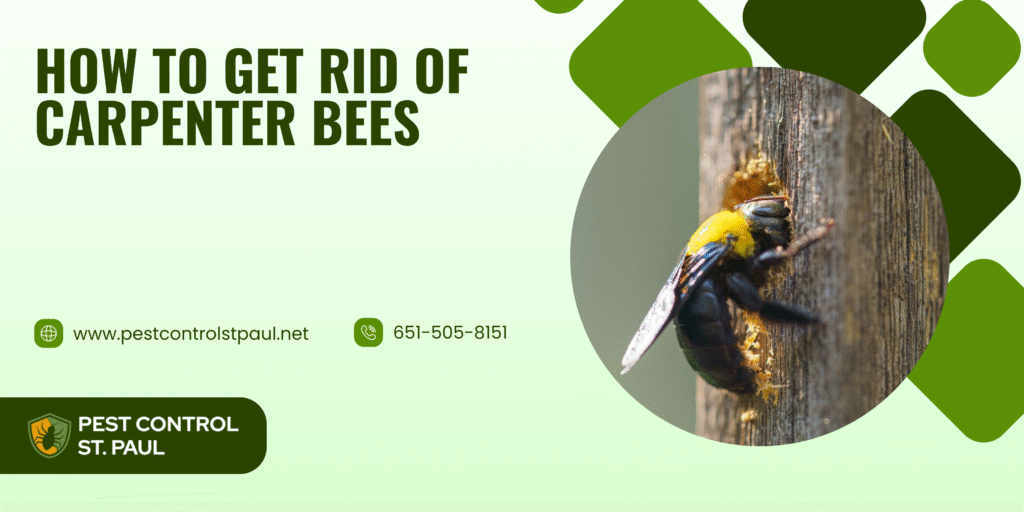
Carpenter bees may look harmless, but they can cause serious damage to your home if ignored. These bees drill round holes in wood to lay their eggs, and over time, the tunnels get deeper and wider. Homes in St Paul see carpenter bee activity every spring and summer, especially around decks, fences, siding, pergolas, and wooden trims.
The good news is that you can get rid of carpenter bees with the right methods. In this guide, we explain how to identify them, remove them safely, and prevent them from coming back. This blog is written by Pest Control St Paul to help homeowners deal with this common problem in a simple and effective way.
What Are Carpenter Bees and Why Do They Come Near Homes?
Carpenter bees are large, black, and yellow bees that look similar to bumblebees. Unlike honey bees, they do not live in hives. They prefer to create their own nest by drilling perfectly round holes in wood.
They come near homes because:
- Wood gives them a safe place to lay eggs
- Soft or untreated wood is easy to drill into
- Sheltered spots like decks and soffits protect their nests
- Old tunnels attract new bees every year
Once carpenter bees pick a spot, they tend to return to the same area again and again, which can lead to increasing damage.
Signs You Have Carpenter Bees
You may have carpenter bees if you notice:
- A perfect round hole about the size of a finger
- Sawdust or wood shavings below the hole
- Buzzing sounds near wooden structures
- Yellow droppings around the hole
- Bees are hovering around the deck, shed, or roofline
These signs usually appear during spring when female bees start nesting.
How to Get Rid of Carpenter Bees
Here are the safest and most effective ways to remove carpenter bees from your home.
1. Use Insecticides for Direct Treatment
This is the most reliable method for eliminating carpenter bees. Treat the holes at night when the bees are inside. You can use:
- Liquid insecticide sprays
- Foaming insecticides
- Insecticidal dust
Spray directly into the entrance holes, let it sit overnight, and repeat for 2 to 3 days if needed. Dust is especially effective since it spreads deeper into the tunnels and kills larvae, too.
2. Use Natural Repellents if You Prefer a Chemical-Free Method
If you do not want to use chemicals, natural repellents work well for mild activity.
Popular natural repellents include:
- Citrus oil spray
- Almond oil spray
- Peppermint oil
- Eucalyptus oil
- Tea tree oil
Mix with water and spray around the holes, railings, and wooden surfaces. These strong scents irritate the bees and push them out.
3. Use Noise or Vibrations to Force Bees Out
Carpenter bees dislike loud vibrations. Placing a portable speaker near the nest and playing loud music for a few hours often makes them leave the tunnel. This method works well before treating or sealing the holes.
4. Try Carpenter Bee Traps
Carpenter bee traps attract bees into a wooden box with a hole similar to a nesting tunnel. Once bees enter, they fall into a chamber where they cannot escape.
Place traps:
- Near existing holes
- On decks
- Under soffits
- Around fences
Traps work best when combined with sealing old holes after the bees leave.
5. Seal the Holes to Prevent Return
Once the bees have been removed, you must seal the holes to stop new bees from coming back.
Use:
- Wood putty
- Wooden dowels
- Corks
- Wood filler
After sealing, paint or stain the area to make it less attractive to carpenter bees in the future.
Preventing Carpenter Bees from Coming Back
Prevention is the most important step because carpenter bees return to old tunnels year after year.
Here is how to keep them away for good:
1. Paint or Stain Exposed Wood
Carpenter bees hate painted wood. A good coat of paint or stain can protect decks, fences, and trims.
2. Seal Cracks and Weathered Wood
Any gap or crack is an invitation. Repair weathered wood and seal gaps regularly.
3. Cover Exposed Wood With Metal Mesh
If a certain area attracts bees every year, covering it with mesh or aluminum flashing can stop drilling.
4. Provide Decoy Wood
Placing a piece of untreated wood away from your home can attract carpenter bees to nest elsewhere.
5. Get Professional Help for Heavy Infestations
If tunnels are deep or widespread, professional treatment is recommended. Experts use stronger tools and insecticides and ensure the entire colony is removed.
At Pest Control St Paul, we help homeowners deal with carpenter bees safely and prevent them from returning.
FAQs
1. Are carpenter bees dangerous?
Carpenter bees are not very aggressive and rarely sting unless directly handled. The main problem is the structural damage they cause by drilling into wood. Over time, these tunnels weaken decks, siding, and fences.
2. Why do carpenter bees keep coming back to the same spot?
They return because old tunnels attract new generations every year. If the holes are not sealed, bees continue expanding them and causing more serious damage. Sealing and painting the wood is the best prevention.
3. What wood do carpenter bees prefer?
Carpenter bees prefer untreated or weathered soft wood like pine, cedar, or redwood. These types of wood are easier for them to drill into. Painting or sealing the wood helps reduce the chance of nesting.
4. Can I use traps to remove carpenter bees?
Yes, carpenter bee traps work well when placed close to nest openings. The bees enter thinking it is a tunnel and then get stuck inside. This is a safe and chemical-free method for mild infestations.
5. When is the best time to treat carpenter bee holes?
Nighttime is the best because bees are inside their tunnels and less active. This allows the treatment to reach the entire colony and reduces the chance of bees flying out during the process.