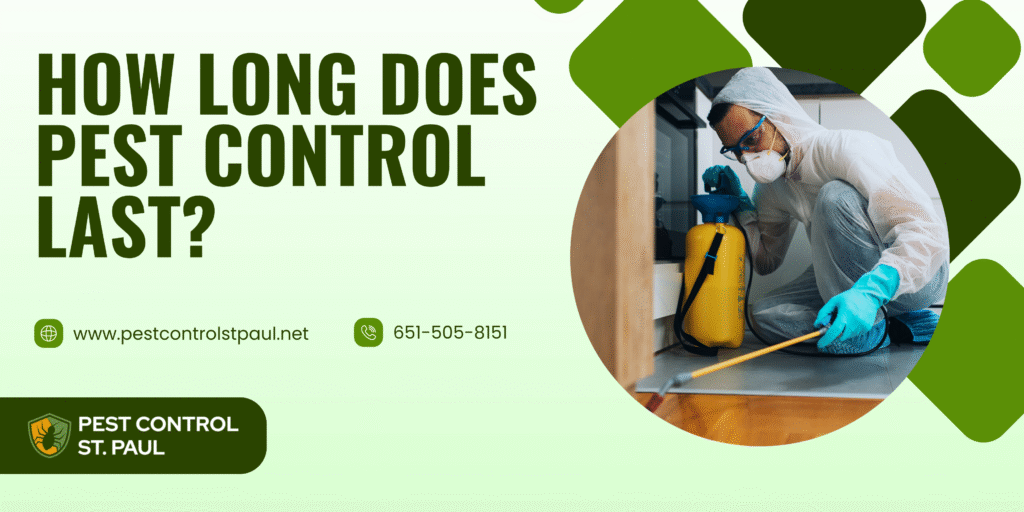
Living in the St. Paul, Minnesota area means encountering unique pest-control challenges. From humid summers to freezing winters, pests can take advantage of changing conditions. Whether you’re dealing with ants in your kitchen, roaches in your basement, or rodents in your attic, it’s important to understand how long a pest-control treatment is effective—and when you’ll need follow-up service. In this article, we’ll explore how long pest control typically lasts, the key factors that influence its longevity, what you can expect for different pests, and how you in the St. Paul area can maximize the value of your service.
Factors That Affect Pest Control Duration
The question “How long will the treatment last?” doesn’t have a one-size-fits-all answer. Several important factors influence the duration of effectiveness:
Type of pest – Different pests behave differently. For example, ants or roaches may need more frequent follow-ups, while treatments for termites or rodents may last much longer.
Severity of infestation – A light or preventative infestation will respond more quickly and remain controlled longer; a heavy, entrenched infestation may require several visits, and the duration of control will be shorter if conditions persist.
Weather & seasonal impacts in Minnesota – St. Paul experiences humid summers that can promote insect activity (including ants, roaches, and mosquitoes), and cold winters that drive pests indoors. These seasonal changes affect how pests move and hide, influencing treatment longevity.
Type of treatment used – Whether it’s a simple spray, bait station, dust, or a fully integrated system (IPM: Integrated Pest Management), the method matters. More comprehensive treatments typically last longer.
Property type & surrounding environment – Your home’s construction, age, level of clutter, moisture sources, and nearby landscaping all affect how easily pests can reinfest. Homes with many crawl spaces, cracks, or attached garages may require more frequent monitoring or retreatment.
Average Duration by Pest Type
Here’s a helpful guide to the typical duration of pest control effectiveness for common pests. Keep in mind these are general estimates — your actual time may vary based on the factors above.
| Pest Type | Typical Duration* |
| Ants | ~ 3–6 months |
| Cockroaches (roaches) | ~ 3–6 months (or longer if heavy infestation) |
| Bed Bugs | Indefinite with proper treatment |
| Rodents | ~ 3–6 months (with maintenance) |
| Termites | Up to 10 years with preventive care |
| Mosquitoes & flying pests | ~ 30 days (for many treatments) |
* Estimates only; actual results will depend on infestation severity, treatment type, and follow-up protocol.
For example, with roaches, it can take several weeks to months to eliminate an infestation.
Types of Pest Control Treatments
Understanding which kind of treatment is being used will help you understand how long it might last.
- Chemical sprays: Often exterior and interior application of insecticides. Good for general pests and gives immediate knock-down, but may require re-treatment if exposure to elements or heavy traffic.
- Bait stations: Especially for ants, roaches, and rodents. The bait is carried back to nests or burrows and can have residual effects.
- Integrated Pest Management (IPM): A holistic approach combining inspection, exclusion (sealing entry points), monitoring, sanitation, and treatment. Usually provides longer-lasting results if well implemented.
- Preventive quarterly/annual maintenance: Instead of treating only when you see pests, many homeowners opt for scheduled visits (e.g., every 3 months) to maintain control year-round. This is especially useful in climates like St. Paul’s, where pests may migrate indoors in colder months.
Local Climate and Its Role in Pest Control Effectiveness
St. Paul’s climate plays a key role in how pests behave and how long treatments last:
- Humid summers: High humidity and warm outdoor conditions make indoor environments more attractive to pests such as ants, roaches, and mosquitoes. Humidity can also reduce the residual effectiveness of treatments that are applied outdoors or in basements.
- Cold winters: As temperatures drop, many pests seek refuge indoors. This means even successful summer treatments might need refreshers in fall or early winter to prevent new infestations.
- Year-round transition zones: Homes in the St. Paul–Minneapolis area often have basements, crawl spaces, attached garages, and older construction—all of which provide potential entry points and harborage for pests. Adequate sealing and monitoring matter.
Because of these factors, homeowners should expect that treatments may need monitoring or refreshing more often than in regions with milder, more stable climates.
Recommended Treatment Schedule for St. Paul Residents
Here’s a suggested schedule based on typical homeowner needs in the St. Paul area:
- One-time service: For a specific infestation (e.g., you saw ants or roaches actively), you may treat immediately and then monitor. Expect the treatment to last 3-6 months under good conditions.
- Quarterly maintenance: Every 3 months, especially for homes with known pest history, older homes, or homes with many entry points. Helps maintain a barrier against pests.
- Annual full inspection & treatment: Once a year, usually in spring (to pre-empt summer pest surge) or fall (to pre-empt winter migration indoors).
Signs you may need retreatment:
- You’re seeing pests again (e.g., ants in the kitchen, roaches at night) before the expected interval ends.
- Fresh signs of infestation (droppings, nests, unexplained damage).
- After heavy rain/flooding, the basement or crawl space moisture has increased.
- Major changes to home structure or landscaping (garage opened, new siding, new utilities).
DIY vs Professional Pest Control
Many homeowners in the St. Paul area wonder whether to hire professionals or try DIY methods. Here’s a breakdown of why professional services often last longer and ensure better coverage:
- Professional technicians have access to stronger residual treatments, specialised baits, dusts, and tools that aren’t available to DIY homeowners.
- They inspect for entry points, hidden nest locations, and make recommendations on sealing and moisture control that extend the life of the treatment.
- They monitor results, schedule follow-ups, and adjust the treatment plan if pests persist—all of which help the long-term duration of control.
- DIY methods may work for small issues, but often don’t address root causes (entry points, structural issues, hidden harborage), which means pests can return sooner.
If you want treatments that last 6 months or more (or even years), or you have a recurring or complex pest issue, professional service is strongly advised.
How to Extend the Effectiveness of Pest Treatments
Here are proven tips for homeowners in St. Paul to get the most out of each pest control service:
- Keep the home clean – Regularly vacuum, wipe down counters, keep food sealed, and reduce clutter. This removes food/harbour for pests.
- Seal entry points – Inspect your home for cracks, gaps around windows/doors, utility penetrations, and basement openings. Sealing these reduces pest ingress.
- Control moisture – Basements, crawl spaces, and garages often have higher humidity or water intrusion. Using dehumidifiers, fixing leaks, and ensuring proper drainage will reduce conditions favourable to pests.
- Maintain landscaping – Keep bushes, mulch, and tree limbs away from the home’s foundation. Pests often migrate from vegetation to your walls.
- Monitor regularly – Even if you don’t see pests, keep an eye out for signs (droppings, nests, live pests). Early detection means shorter treatments.
- Follow technician instructions – If your pest control professional advises “do not wash treated surfaces for 24 hours” or “keep pets off treated area”, follow those guidelines so the treatment sets and remains effective.
- Schedule regular servicing – Align with seasonal shifts in St. Paul (spring inspection, summer follow-up, fall barrier) to maintain pest-free status.
By following these steps, you can extend the effective life of your treatment, reduce the need for repeat services, and save long-term
Conclusion
In summary, the longevity of pest control in the St. Paul area depends on pest type, infestation severity, local climate, treatment method, and home environment. For many common pests like ants or roaches, you can reasonably expect 3-6 months of protection under good conditions. For major pests like termites or rodents with preventive care, control can last years. That said, scheduling quarterly or annual visits, choosing professional services, and taking proactive steps around your home will maximise the duration of effectiveness. If you’re in St. Paul and ready for a professional inspection, don’t wait—addressing it early means less hassle later and a more pest-resistant home all year round.
FAQs
Q: How often should I do pest control in St. Paul?
A: For most homes, an inspection and service every 3-6 months is advisable, especially if you’ve had past pest issues. For a preventive approach in a home without known issues, a once-a-year full inspection may suffice, supplemented by seasonal checks.
Q: Does the weather affect pest treatment effectiveness?
A: Yes. In St. Paul, humid summers and cold winters affect pest activity and the lifespan of treatments. Moisture, heavy rain, snow melt, and basement humidity can degrade residuals faster, so weather and climate conditions must be considered when planning servicing.
Q: How long after treatment can I expect results?
A: It varies by pest and treatment type. Some pests respond quickly (within days), but complete control may take weeks to months, especially for roaches or bed bugs. For example, roach treatments may show results within days, but full eradication can take months.
Q: Can one pest control treatment last all year?
A: In some cases, yes—especially for pests with season-specific activity and homes with strong exclusion and maintenance. However, given St. Paul’s seasonal climate, most homes benefit from at least one follow-up or seasonal preventive service to keep protection strong year-round.
Q: How long does pest control last for roaches?
A: For roaches, treatment duration varies a lot. A professional service may begin to reduce activity in days, but full control often takes several weeks to several months, particularly in heavy infestations. Residual treatments and sanitation efforts will determine how long the control lasts.