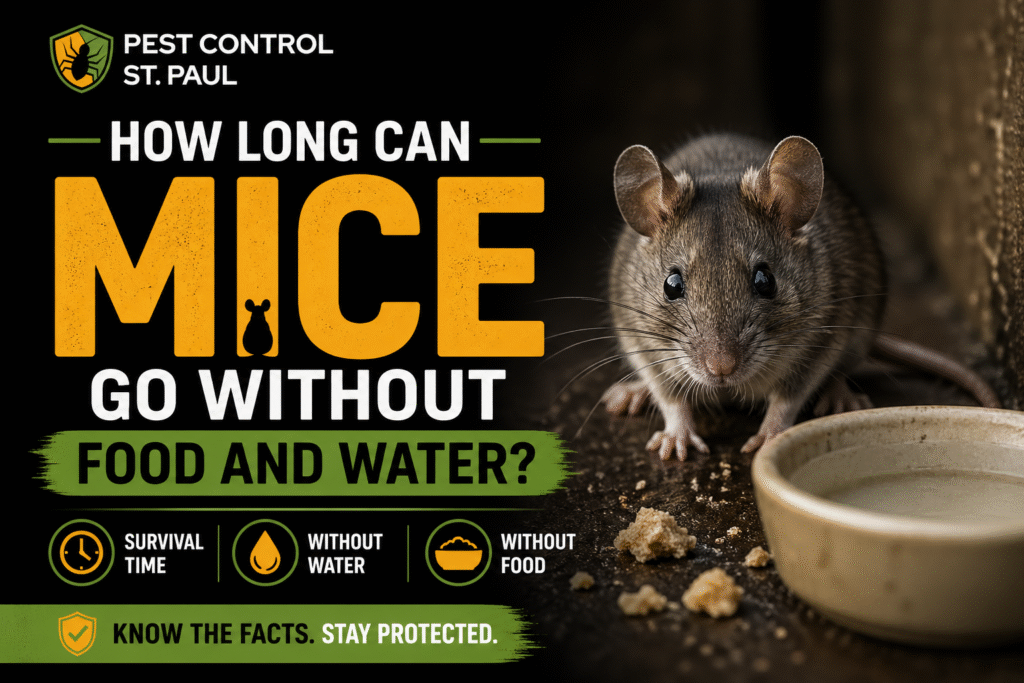
When you discover mice in your St. Paul home, one question often comes to mind: “How long do I have before they cause serious damage?” Understanding how long mice can survive without food and water is crucial for effective pest control and recognizing the urgency of your situation.
The answer might surprise you, and it’s one reason why professional rodent control in St. Paul is so important.
How Long Can Mice Survive Without Water?
Mice can only survive 2-4 days without water, making this their most critical survival need. This short timeframe reveals a critical vulnerability that pest control professionals use to their advantage.
Mice are naturally drawn to moisture sources in your home. They’ll seek out:
- Leaky pipes and dripping faucets
- Condensation under sinks
- Pet water bowls
- Bathroom moisture and humidity
- Damp basements and crawl spaces
This is why addressing water sources is an essential part of effective rodent control. If mice find water, they can sustain themselves on surprisingly little food—a critical insight for identifying where infestations may be hiding in your St. Paul property.
How Long Can Mice Survive Without Food?
Mice can survive 3-7 days without food, depending on several factors:
- Their age and overall health
- The environment’s temperature
- Their stress level
- Whether they have access to water
However, this survival period is longer than many people realize. A mouse doesn’t need much food to thrive, just 3-4 grams per day, roughly the size of a pea. This means mice can survive for weeks on crumbs that you might not even notice are missing from your kitchen.
Why This Matters for Your Home
Understanding this survival timeline is essential because:
- Mice breed rapidly – A single female can produce 5-10 litters per year, with 5-6 pups per litter. Even if you eliminate your food sources, an existing infestation can explode in population within weeks.
- They hide food and water – Mice are intelligent foragers that store food in hidden locations throughout your walls, attic, and crawl spaces, making it nearly impossible to starve an infestation without professional help.
- One mouse signals many more – If you see a single mouse, there are likely dozens more hiding in walls, insulation, and inaccessible spaces.
Why Starvation Isn’t an Effective Pest Control Strategy
Many St. Paul homeowners believe they can simply seal up food sources and wait out a mouse infestation. Unfortunately, this approach has several fatal flaws:
Mice Will Eat Anything
Mice aren’t picky eaters. They’ll consume:
- Cardboard and paper
- Insulation and drywall
- Pet food and birdseed
- Pantry staples and crumbs
- Plant matter and seeds
If you’re planning to wait out mice through starvation, they’re likely finding adequate nutrition from sources you haven’t thought of.
They Cause Damage Quickly
While starving, mice won’t simply sit idle, they’ll chew through:
- Electrical wiring (creating fire hazards)
- Water pipes
- Insulation
- Wooden framing
A small mouse infestation can cause thousands of dollars in damage in just a few weeks.
Health Risks Don’t Wait
Mice pose immediate health threats that don’t depend on their food supply:
- Hantavirus: Spread through contact with mouse droppings
- Salmonella: Contamination of surfaces and food
- Leptospirosis: Urine-borne bacteria that causes serious illness
- Allergies and asthma triggers: Mouse dander and urine
What You Should Do Instead: Professional Rodent Control
Rather than hoping mice will starve, the most effective approach is to address the infestation immediately. Here’s why professional rodent control is the smart choice for St. Paul homeowners:
1. Trapping and Removal
Licensed technicians place traps in high-activity areas to eliminate the existing population quickly within days rather than weeks.
2. Entry Point Sealing
Our experts identify and seal every possible entry point, preventing new mice from entering your home. Common entry points include:
- Gaps around pipes and utilities
- Cracks in the foundation or siding
- Holes in the roof soffits and vents
- Openings around chimneys
3. Sanitation and Prevention
We help you eliminate food and water sources while advising on storage best practices to make your home less attractive to future invaders.
4. Ongoing Monitoring
Regular inspections catch early signs of re-infestation before populations explode.
Signs You Have a Mouse Problem
Don’t wait to see a mouse scurrying across your floor. Watch for these warning signs:
- Droppings: Small, dark pellets near food sources or baseboards
- Gnaw marks: On wires, pipes, and drywall
- Musty odor: Distinctive smell in enclosed spaces
- Scratching sounds: Especially at night in the walls and attic
- Nesting materials: Shredded paper, insulation, or fabric in corners
- Damaged food containers: Chewed boxes or bags in your pantry
Why Choose Pest Control St Paul for Rodent Removal?
At Pest Control St Paul, we understand the urgency of a mouse infestation. Our team of licensed rodent control experts uses proven methods to eliminate existing populations and prevent future infestations. We provide:
- Same-day service for urgent rodent problems
- Comprehensive inspections to identify entry points and nesting areas
- Humane trapping and removal with thorough cleanup
- Sealing and exclusion services to prevent re-infestation
- 100% satisfaction guarantee – If mice return, we return at no extra cost
Take Action Today!
If you’ve spotted mice in your St. Paul home or business, don’t waste time hoping they’ll starve. The longer you wait, the larger the population grows and the more damage they cause.
Contact Pest Control St Paul today for a free rodent inspection and removal quote. Our team is available for same-day service across St. Paul and the surrounding areas.
Call us now: 651-505-8151
Or schedule your free consultation online and get back to enjoying a pest-free home.
Pest Control St Paul is St. Paul’s trusted rodent control specialist, serving residential and commercial properties with professional, effective, and family-safe pest elimination solutions.
Frequently Asked Questions About Mouse Survival
Can mice die from dehydration faster than from starvation?
Yes. While mice can survive 3-7 days without food, they’ll typically die from dehydration in just 2-4 days without water. Water is their primary limiting factor.
What temperature do mice prefer?
Mice thrive in temperatures between 65-75°F, which is also comfortable for most humans. Your home’s climate is ideal for mouse survival and reproduction.
How much food does a mouse actually eat?
A mouse eats 3-4 grams of food daily, roughly equal to a few grains of rice. This tiny amount means your crumb removal efforts may not make a dent in an existing infestation.
Can I get rid of mice myself?
While DIY trapping can remove some mice, professional rodent control is significantly more effective. We access areas you can’t reach and implement comprehensive prevention strategies.
How long does professional rodent removal take?
Initial removal typically takes 1-2 weeks, with follow-up inspections to ensure complete elimination. Prevention and sealing can take additional time depending on your home’s size and condition.